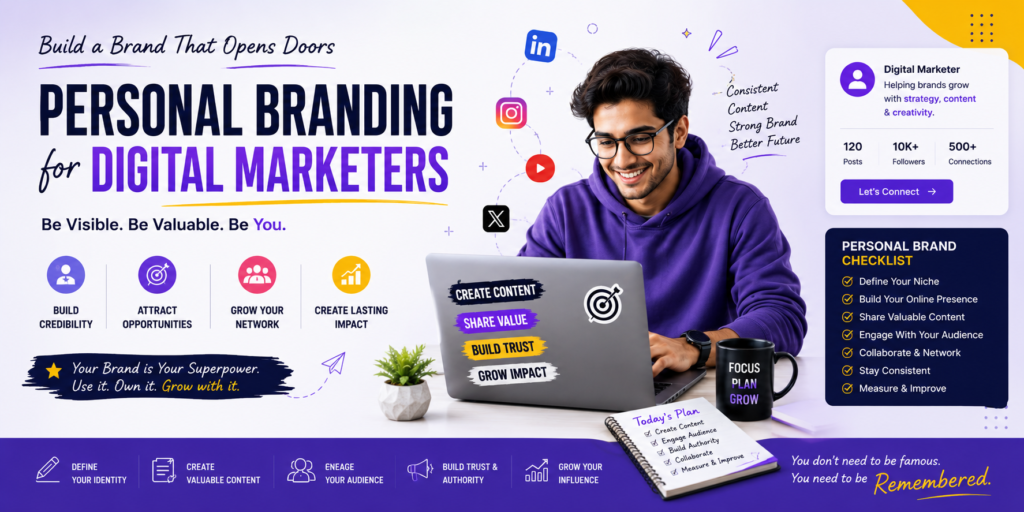
7 Powerful Personal Branding Tips for Digital Marketers
Personal Branding for Digital Marketers In 2026, skills alone are not enough in digital marketing. You can know: SEO Social media marketing Affiliate marketing Content writing But if nobody knows you online, getting clients and opportunities becomes harder. That’s where personal branding for digital marketers becomes important. I’ve spent years working in SEO and Amazon affiliate marketing, building websites, ranking blogs, and growing online authority. One thing became very clear during this journey: People trust people more than logos. A strong personal brand helps digital marketers: Get clients Build authority Grow audience Increase income opportunities This guide will explain exactly how personal branding works for digital marketers and how beginners can start building it step by step. This guide on personal branding for digital marketers is designed to help beginners build authority, trust, and long-term visibility online. What is Personal Branding? Personal branding is the process of creating an online identity around your: Skills Knowledge Experience Personality It helps people recognize and trust you. Simple Example When someone consistently shares: SEO tips Marketing advice Case studies Helpful content people start seeing them as an expert. That is personal branding. Why Personal Branding is Important for Digital Marketers The digital marketing industry is highly competitive. Many people know: SEO Content marketing Social media But very few build a recognizable online presence. Benefits of Personal Branding Better Client Opportunities Clients trust marketers with visible authority. Higher Freelancing Income A strong brand helps justify premium pricing. More Networking Opportunities People connect with creators who share useful content. Long-Term Career Growth Your brand becomes a long-term asset. 👉 From my affiliate marketing experience: Websites brought traffic, but personal branding brought trust and opportunities. Step 1 – Choose Your Niche One of the biggest branding mistakes is being too general. Focus on One Area Examples: SEO Affiliate marketing Social media marketing Content writing Paid advertising My Recommendation If you’re a beginner: 👉 Start with SEO + content marketing. Why? Easier to create educational content Strong demand Great for long-term authority Step 2 – Optimize Your Social Profiles Your social profiles are part of your digital identity. Platforms to Focus On LinkedIn Instagram X (Twitter) What to Improve Professional Profile Photo Use a clear and professional image. Strong Bio Explain: What you do Who you help Portfolio or Website Link Add your website or portfolio. Step 3 – Start Creating Content Content is the foundation of personal branding. Without content: Nobody knows your expertise Trust grows slowly Visibility remains low Content Ideas for Digital Marketers SEO tips Marketing mistakes Affiliate case studies Content writing strategies Tool recommendations Best Beginner Content Strategy Start simple: 1 post daily Short educational content Practical advice 👉 From experience: Consistency matters more than perfection. Step 4 – Build a Website or Blog A website increases authority and professionalism. Why Websites Matter They help showcase: Skills Portfolio Articles SEO knowledge Best Platform WordPress is ideal for: Blogging SEO Affiliate marketing What to Publish Tutorials SEO guides Case studies Portfolio work 👉 My affiliate blogs became proof of my SEO and content marketing skills. Step 5 – Share Real Experience This is where most personal brands fail. Many creators only repeat generic advice What Works Better Share: Mistakes Lessons Real strategies Results Example Instead of: ❌ “SEO is important” Write: ✅ “Updating old affiliate articles increased my organic traffic by 40%.” 👉 Real experiences build credibility faster. Step 6 – Network With Other Marketers Networking increases visibility. Ways to Network Comment on posts Join communities Connect on LinkedIn Collaborate with creators Important Tip Don’t network only to sell. Build genuine relationships first. Step 7 – Build Trust Consistently Trust is the core of personal branding. How to Build Trust Share useful content Avoid fake claims Stay consistent Show real proof 👉 In affiliate marketing, trust directly affects conversions and long-term audience growth. SEO and Personal Branding SEO can strengthen personal branding significantly. SEO plays an important role in personal branding for digital marketers because it improves online visibility and authority. Benefits of SEO Branding Google visibility Organic traffic Authority building SEO Tools You Should Know Google Analytics Google Analytics Google Search Console Google Search Console Rank Math SEO Rank Math SEO Common Personal Branding Mistakes Copying Other Creators Originality matters. Inconsistent Posting Personal branding requires consistency. Trying to Impress Everyone Focus on your target audience. No Personal Experience Experience-based content performs better. How Affiliate Marketing Helped My Personal Brand Affiliate marketing taught me: SEO strategy Audience psychology Trust building Content optimization The biggest lesson: 👉 Helpful content creates long-term authority. That same principle applies to personal branding. Future of Personal Branding for Digital Marketers in 2026 Personal branding will become even more important because: AI content is increasing Competition is growing Trust matters more than ever What Will Matter Most Real experience Consistency Authenticity Helpful content SEO Optimization Checklist Focus keyword in title ✔ Focus keyword in URL ✔ Keyword in first paragraph ✔ Proper H1-H3 headings ✔ External links added ✔ FAQ section included ✔ Image placeholders added ✔ 1500+ words optimized ✔ Final Thoughts Building a personal brand takes time, but the rewards are massive. If you focus on: Sharing knowledge Helping people Creating consistent content Building trust your personal brand will grow naturally. That’s the real power of personal branding for digital marketers in 2026. FAQs – Personal Branding for Digital Marketers Q1. Why is personal branding important for digital marketers? Personal branding helps marketers build trust, authority, and visibility online. Q2. Which platform is best for personal branding? LinkedIn and Instagram are excellent platforms for digital marketers. Q3. Can beginners build a personal brand? Yes, beginners can grow by consistently sharing useful content and learning publicly. Q4. How long does personal branding take? It usually takes months of consistent effort to build strong authority. Q5. Does SEO help personal branding Yes, SEO improves online visibility and helps people discover your content. Q6. Why is personal branding for digital marketers important in 2026? Because competition is increasing and audiences
7 Powerful Personal Branding Tips for Digital Marketers Read More »