

Digital Marketer Portfolio: Amazing Guide to Get Clients in 2026

What is a Digital Marketer Portfolio (With Examples)

A well-structured digital marketer portfolio not only highlights your skills but also demonstrates real-world results like traffic growth, lead generation, and ROI improvement. This makes it easier for clients to trust your expertise.
A digital marketer portfolio is one of the most powerful tools to showcase your skills, prove your expertise, and attract high-paying clients in 2026. Whether you are a freelancer, job seeker, or agency marketer, a strong portfolio can help you stand out in a competitive digital world and win better opportunities.
Why a Digital Marketer Portfolio Matters More Than a Resume?
Let’s be honest—resumes are boring. They are static, formal, and often full of vague statements like “responsible for managing campaigns.” That doesn’t excite anyone.
A digital marketing portfolio, on the other hand, is dynamic. It speaks. It shows. It convinces. It allows you to visually demonstrate your impact instead of just listing job responsibilities.
Many top clients today don’t even ask for resumes. They say, “Send me your portfolio.” Why? Because results matter more than titles. If your portfolio is strong, you can beat candidates with better degrees or bigger job titles.
Creating a strong digital marketer portfolio can boost your chances of getting better projects.
A well-structured digital marketer portfolio not only highlights your skills but also demonstrates real-world results like traffic growth, lead generation, and ROI improvement. This makes it easier for clients to trust your expertise
Who Needs a Digital Marketer Portfolio?

If you are a freelancer, your portfolio is your lifeline. It is how you win clients, justify your rates, and build trust.
If you work in an agency, a personal portfolio still helps you stand out, get promotions, and attract better opportunities.
If you are a job seeker, your portfolio can make recruiters say, “We need this person on our team.”
In simple words, if you are in digital marketing, you need a portfolio—no excuses.
Common Myths About Digital Marketing Portfolios
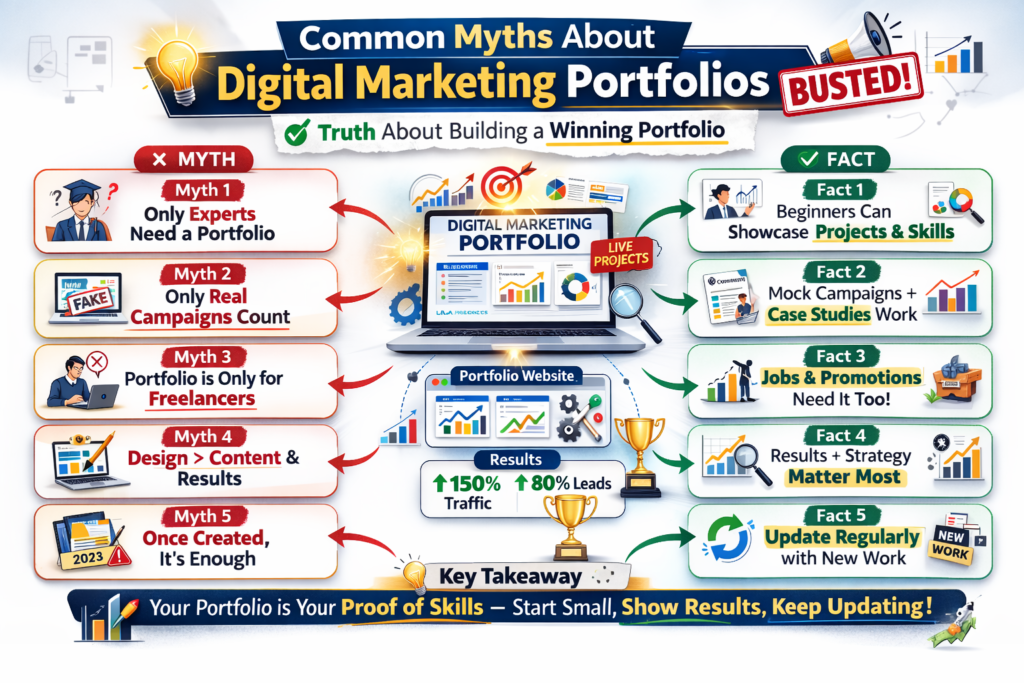
Many beginners think, “I don’t have enough experience to make a portfolio.” That is a myth. You can build case studies from practice projects, internships, or even your own experiments.
Another myth is that portfolios are only for designers. That is completely false. Digital marketers, content creators, SEO specialists, PPC experts, and social media managers all need portfolios.
Essential Elements of a High-Converting Digital Marketer Portfolio

Creating a high-converting digital marketer portfolio requires a combination of strong personal branding, clear positioning, and data-driven case studies that show measurable results.
Your portfolio should not just look pretty; it should work like a marketing funnel.
Personal Branding and Positioning
Your personal brand is how people perceive you. Are you a data-driven marketer? A creative storyteller? A growth hacker? Your portfolio should clearly communicate your positioning.
Your name, headline, and introduction should instantly tell visitors who you are and what you do.
Skills You Must Showcase
Technical Skills
These include SEO, Google Ads, Meta Ads, content marketing, email marketing, analytics, and CRO. Don’t just list them—show examples.
Soft Skills
Clients also care about communication, problem-solving, and reliability. You can highlight these through testimonials and storytelling.
Case Studies: The Heart of Your Portfolio

If your portfolio were a body, case studies would be the heart. They pump credibility into your profile.
A good case study should include:
- The problem the client faced
- Your strategy
- What you implemented
- The results achieved
Instead of saying, “I improved traffic,” say, “I increased organic traffic by 120% in 6 months.”
Results and Data That Impress Clients
Numbers speak louder than words. Screenshots of Google Analytics, ad dashboards, keyword rankings, and revenue growth charts make your portfolio powerful.
Clients love measurable results. They want proof that their money will generate returns.
How to Structure Your Digital Marketing Portfolio Website
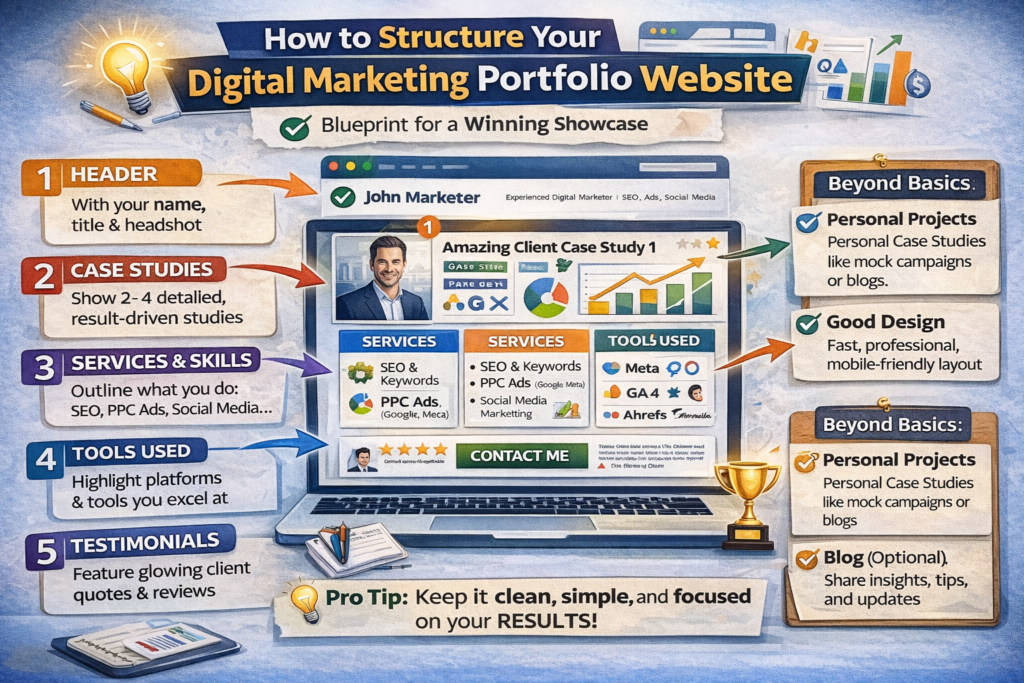
Homepage That Hooks Attention
Your homepage should instantly grab attention. A strong headline, clear value proposition, and a call-to-action like “View My Work” or “Book a Call” work great.
About Page That Builds Trust
Tell your story. How did you get into digital marketing? What drives you? What makes you different? People connect with stories.
Services Page That Sells
Clearly explain what you offer—SEO, ads, content, social media, etc.—and how it benefits clients.
Portfolio/Work Page That Converts
Show your best projects, not everything you’ve ever done. Quality beats quantity.
Testimonials and Social Proof
Real client reviews build instant trust. Even 3–5 strong testimonials can make a big difference.
Contact Page That Generates Leads
Make it easy for people to reach you—contact form, email, LinkedIn, and WhatsApp if relevant.
Best Platforms to Build Your Portfolio
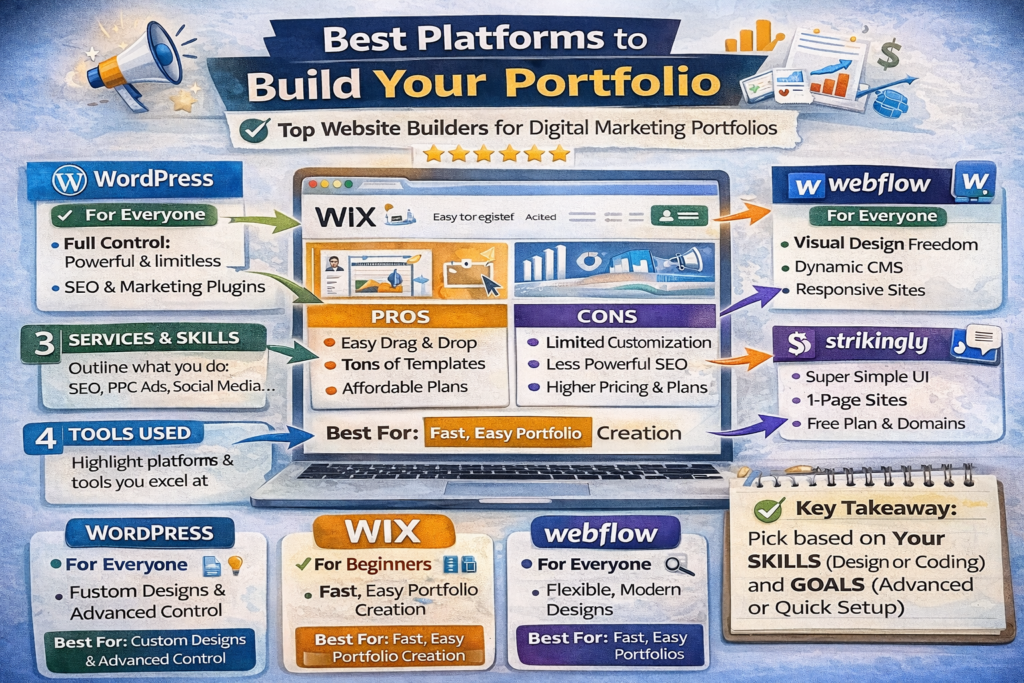
WordPress with Elementor is a powerful, flexible, and professional option. You can design a premium-looking site without coding.
Webflow
Webflow is great if you want sleek, modern, and highly customizable designs.
Behance & LinkedIn
These are excellent for showcasing work, especially if you are just starting.
How to Write Killer Case Studies
Step-by-Step Case Study Framework
- Client background
- Challenge
- Strategy
- Execution
- Results
- Learnings
This structure keeps your case studies clear and compelling.
SEO Optimization for Your Digital Marketer Portfolio

On-Page SEO Tips
To rank your digital marketer portfolio on Google, you need to optimize your content with relevant keywords, proper headings, meta tags, and image alt text. A well-optimized portfolio can bring organic traffic and potential clients.
Use keywords like “digital marketer portfolio,” “freelance digital marketer,” and “SEO specialist portfolio” naturally in your content.
Optimize your meta titles, descriptions, images, and headings.
Keywords You Should Target
- Digital marketer portfolio
- Freelance digital marketer
- SEO portfolio
- Social media marketing portfolio
- PPC portfolio
How to Get Your First Portfolio Projects
Start with internships, volunteer work, personal projects, or small freelance gigs. Even offering discounted services initially can help you build real case studies.
How to Update and Scale Your Portfolio Over Time
Your portfolio should grow with you. Add new projects, update results, and refine your messaging regularly.
Conclusion
A digital marketer portfolio is not optional—it is essential. It is your digital identity, your proof of skill, and your ticket to better opportunities. Whether you are a beginner or an expert, investing time in building a strong portfolio will pay off in the long run. Make it professional, results-driven, and authentically you.
FAQs
- How long should a digital marketing portfolio be?
It should be concise but impactful—usually 5–10 strong projects are enough. - Do I need a website for my portfolio?
Not mandatory, but highly recommended for professionalism. - Can I create a portfolio without paid clients?
Yes, you can use personal projects or mock case studies. - Which platform is best for beginners?
WordPress with Elementor or Behance is great to start. - How often should I update my portfolio?
At least every 3–6 months or whenever you complete a major project.
Pingback: Digital Marketing for Beginners in 2026: Complete Guide